
Beyond Borders, Towards Better Health: Nutrition Council of India Builds Pathways for International Collaboration
Lucknow | 2 November 2026
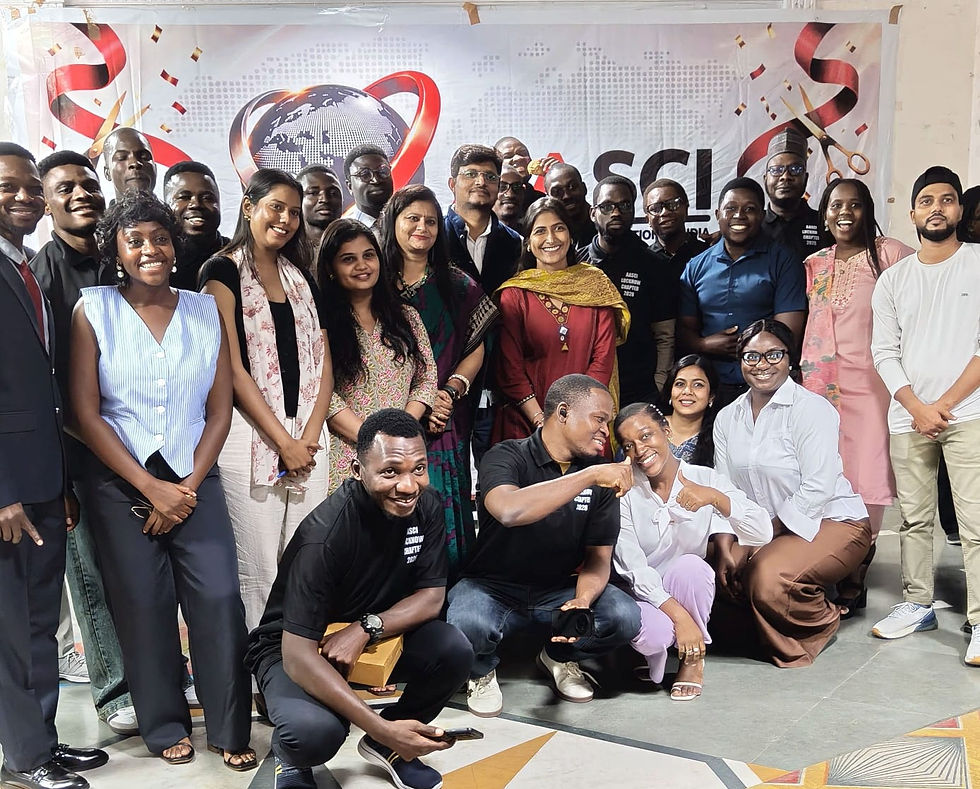
In a significant step towards strengthening international cooperation in nutrition, healthcare, and public health, the Nutrition Council of India (NCI), in association with the Association of African Students in India (AASCI), Lucknow Chapter, organised an international engagement programme titled “Global Minds for a Healthier Tomorrow: Nutrition and Healthier Societies” on 2 November 2026 in Lucknow.
The programme brought together international students from diverse academic backgrounds representing African and Asian nations, including Namibia, Bangladesh, Nigeria, Ghana, Kenya, Uganda, Lesotho. The gathering provided a platform for cross-cultural exchange, academic networking, and exploration of future collaborations in nutrition, healthcare, and community development.
Moving beyond conventional academic interaction, the programme focused on connecting NCI with the international student community and exploring opportunities to extend collaborative initiatives across national boundaries. The broader vision was to encourage students to become active contributors to public health development in their respective countries.
Connecting Global Minds Through Nutrition and Public Health
The programme introduced the vision, philosophy, and activities of the Nutrition Council of India, guided by its central belief: “Nutrition is a Human Right, not a Privilege.”
NCI's six major areas of work—sustainable nutrition systems, food quality and innovation, education and capacity building, research and data, policy advocacy, and integrated healthcare nutrition—were presented as interconnected domains for national and international cooperation.


Students were introduced to four pathways of engagement with NCI: The Learner, The Doer, The Researcher, and The Builder. These pathways highlighted opportunities for professional development, community participation, research collaboration, and institutional partnerships.
Advancing Collaborative Research and Academic Exchange
A major focus of the programme was the potential for collaborative research between India and participating countries. Students were encouraged to explore research opportunities in areas such as dietary patterns, nutritional status, nutritional deficiencies, food safety, diabetes, obesity, and other non-communicable diseases.
Potential areas of engagement included:
Comparative research on nutrition and lifestyle-related health outcomes across countries.
Joint surveys on dietary practices, food safety, and community nutrition.
Collaborative research projects and scientific publications.
Laboratory exposure, food quality assessment, and product development.
Academic networking, research mentorship, and participation in scientific activities.
The programme highlighted how international students could contribute valuable local perspectives and contextual knowledge from their home countries, strengthening the relevance and reach of collaborative research.
Education, Training and Professional Development
NCI presented its membership programmes, certificate courses, internships, and fellowship opportunities as pathways for international students and young professionals to strengthen their academic and professional capabilities.
The emphasis was on building a network of trained individuals who could contribute to nutrition and public health initiatives in India and internationally. Opportunities for professional networking, multidisciplinary learning, research engagement, and future leadership were also highlighted.
Building International Institutional Partnerships
The programme further explored opportunities for developing sustained connections with universities, healthcare institutions, research organisations, NGOs, and professional networks across participating countries.
Potential areas of collaboration included:
Academic partnerships: Student engagement, knowledge exchange, institutional linkages, and joint educational initiatives.
Research partnerships: Collaborative research projects, joint publications, comparative studies, and scientific exchange.
Community health partnerships: Development of locally adapted Health and Nutrition Centres and community-based interventions.
Capacity building: Training programmes, internships, professional development, and public health volunteer networks.
International representation: Exploring NCI ambassadors and country-level coordinators to facilitate communication and institutional engagement.
These opportunities aim to create a framework through which interested students and professionals can connect their home institutions and communities with NCI's ongoing initiatives.
A Shared Vision for Global Health
The programme concluded with an invitation to participants to register their interests, identify potential areas of collaboration, and remain connected with NCI representatives for further engagement.
Through this initiative, the Nutrition Council of India reaffirmed its commitment to developing an international network of students, researchers, healthcare professionals, and institutions working towards common public health goals.
The initiative represents an opportunity to move beyond geographical boundaries and create meaningful partnerships that connect academic knowledge with research, professional development, and community-level action.
The vision is not simply to take an Indian initiative to other countries, but to build a global platform where nations learn from one another, develop solutions together, and work collectively towards healthier societies.


Comments